
Blue Light & Kids · A Parent's Guide
Blue Light and Kids: What Every Parent Should Know About Sleep, Screens & Development.
Light is one of the strongest signals shaping a child's brain every day. Here's what the science actually says — and what to do about it.
The Overlooked Signal
Light
Most parents worry about what their children eat.
They think about sugar.
Processed food.
Exercise.
School.
But almost nobody talks about one of the strongest signals shaping a child's brain every single day: Light.
For most of human history, children spent their days outdoors under sunlight and their evenings under darkness.
Today things look very different.
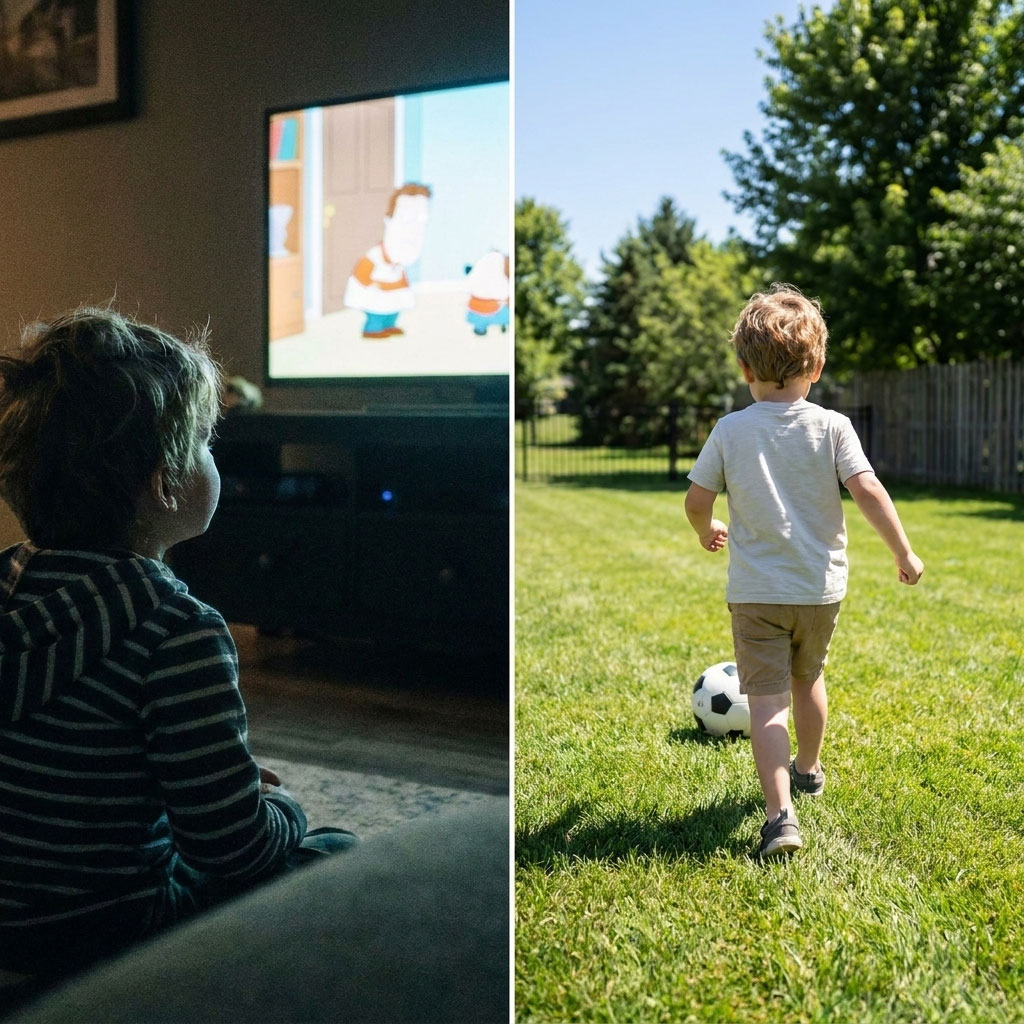
Children wake up under artificial lights. Spend their days indoors. Then continue receiving bright blue-rich light from televisions, tablets, smartphones, gaming consoles, and LED lighting long after the sun has disappeared.
The question is:
What does this do to a developing brain?
Let's look at what the science says.
01 · The Mechanism
How does blue light affect kids?
Blue light is not inherently bad. In fact, children need it. Blue wavelengths are naturally present in sunlight and help regulate one of the most important systems in the body:
The circadian rhythm — your child's internal clock.
It controls:
- Sleep
- Wakefulness
- Hormone production
- Body temperature
- Metabolism
- Mood
- Attention
During the day, blue light tells the brain: “Stay awake. Stay alert. It is daytime.” After sunset, blue light naturally disappears. This allows melatonin, often called the sleep hormone, to rise.
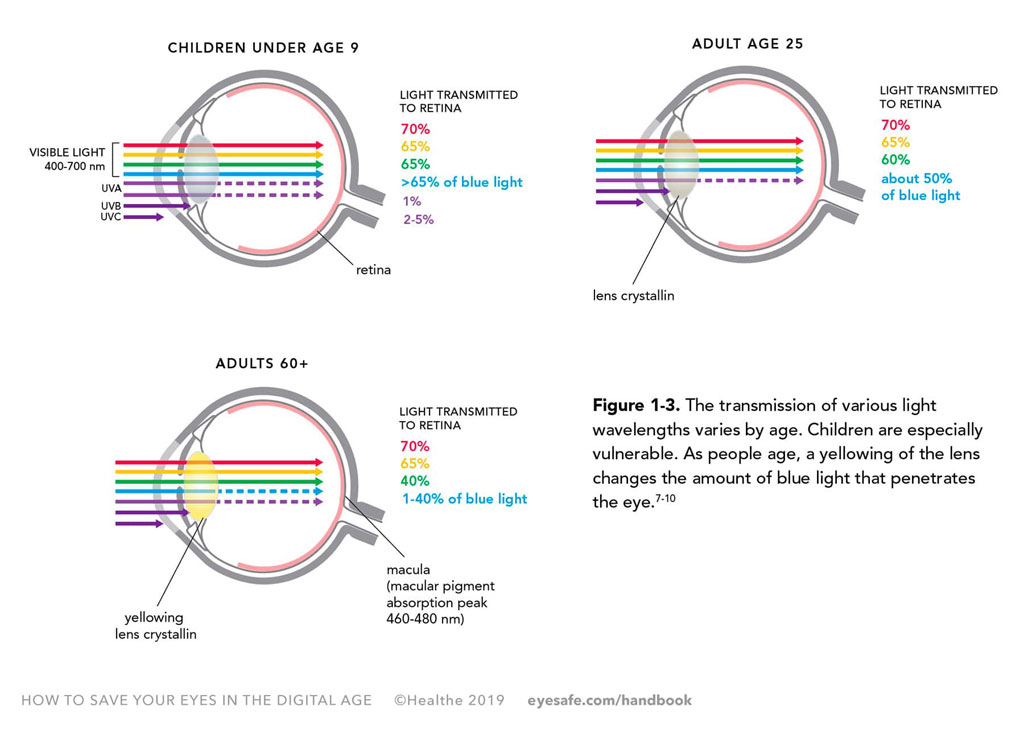
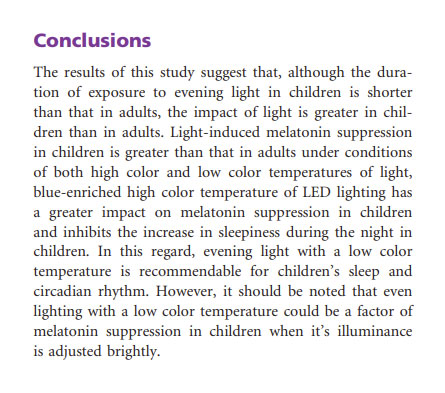
The problem is that modern screens and LED lights continue producing blue wavelengths long after sunset. Research shows children are significantly more sensitive to blue light than adults and can experience almost twice the melatonin suppression under the same lighting conditions.
This can make it harder for children to:
- Feel sleepy
- Fall asleep
- Stay asleep
- Maintain healthy sleep rhythms
What Parents Can Do
Blue light isn't the enemy. Bad timing is.
Encourage plenty of blue-rich sunlight during the day and reduce blue-rich light during the final few hours before bed.
02 · The Nuance
Is blue light OK for kids?
Yes. And this is where many articles get it wrong. Blue light is not something children should avoid completely.
Without blue light we wouldn't have healthy circadian rhythms. We wouldn't feel alert during the day. We wouldn't synchronize properly with the natural day-night cycle.
Studies have found that blue-enriched light during daytime hours may improve attention, alertness, and cognitive performance in children and adolescents.
The goal is not to eliminate blue light. The goal is to receive it when nature intended.
What Parents Can Do
Think of blue light like sunlight. The more your child gets during the morning and daytime, the better. The less they get before bed, the better.
03 · Babies
How does blue light affect babies?
Babies are especially sensitive to light. Their eyes are different from adult eyes. Their circadian rhythms are still developing. And their bodies are learning one of life's most important lessons:
When is daytime? When is nighttime?
Because infant lenses are more transparent, significantly more blue light reaches the retina compared to adults. Researchers estimate newborns may receive almost three times more retinal blue light exposure than adults under identical conditions.
What Parents Can Do
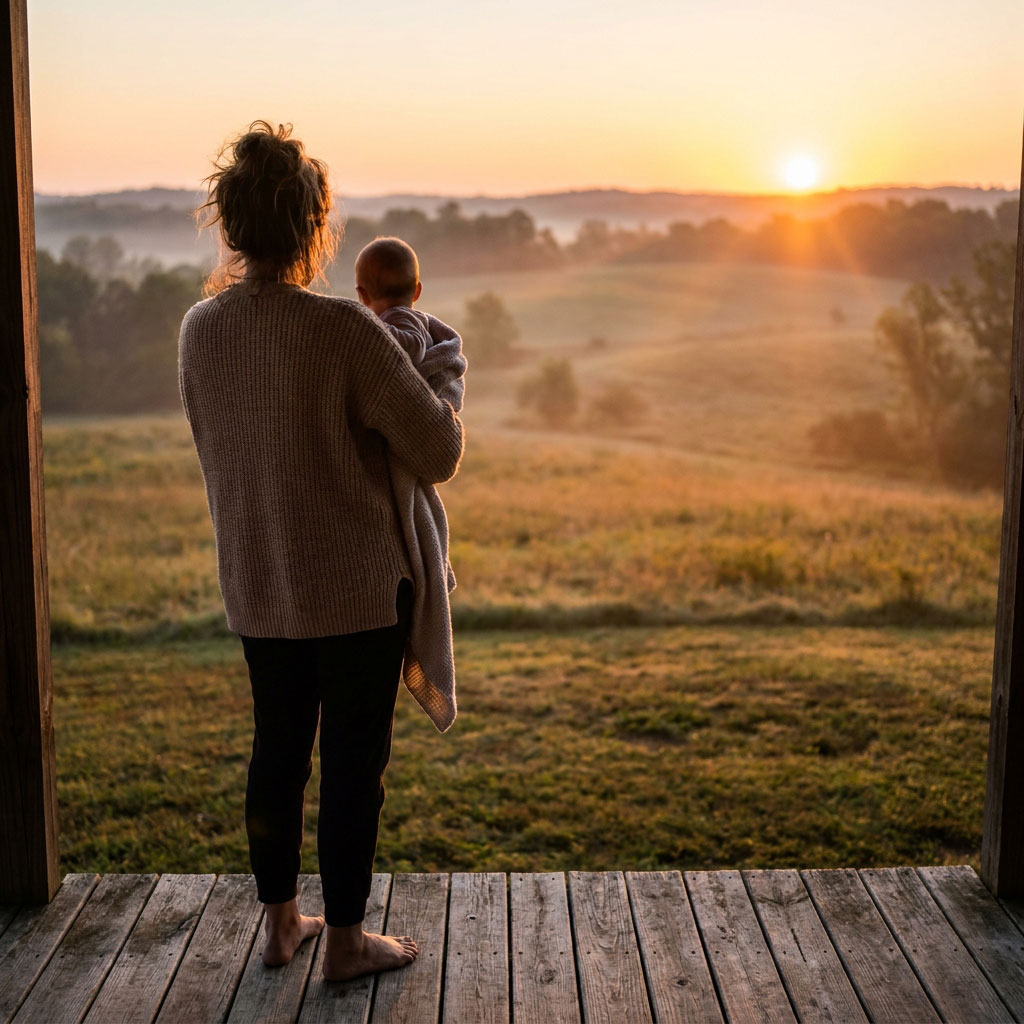
Use bright natural light during the day. Keep nighttime feeds and diaper changes under dim amber or red light whenever possible.
Help your baby's body learn the difference between day and night.
04 · Infants
Effect of blue light on infants.
Infants rely heavily on light cues to develop healthy sleep-wake patterns. Research shows stronger differences between daytime and nighttime light exposure help infants develop stronger circadian rhythms.
Many parents focus entirely on feeding schedules. But light schedules matter too.
Every sunrise sends information. Every sunset sends information. The clearer those signals are, the easier it becomes for an infant's body to organize sleep.
What Parents Can Do
Think about creating contrast:
- Bright days
- Dark nights
Nature has been using this system for millions of years.
05 · Newborns
Blue light for a newborn baby.
Parents often hear that hospitals use blue light to treat jaundice. This is true. Blue light phototherapy is an important medical treatment that helps break down bilirubin in newborns.
But this is completely different from everyday lighting in a nursery. Phototherapy is:
- Temporary
- Controlled
- Medically supervised
At home, your goal isn't treatment. Your goal is helping your baby's biological clock develop normally.
What Parents Can Do
Keep daytime environments bright and nighttime environments dim. Your newborn's brain is constantly learning from the light around them.
06 · Development
Blue light and child development.
One of the most common concerns parents have is whether blue light can affect development. The answer is indirect but important.
Blue light itself is not preventing development.
Poor sleep might.
During sleep, children perform some of their most important biological work:
- Brain development
- Memory formation
- Learning
- Emotional regulation
- Growth hormone release
- Physical recovery
Anything that regularly interferes with healthy sleep may affect these processes over time.
What Parents Can Do
Protect sleep like you protect nutrition. Children don't grow only through food. They grow through sleep too.
07 · ADHD
How does blue light affect ADHD?
Sleep difficulties are extremely common in children with ADHD. Many struggle with:
- Falling asleep
- Staying asleep
- Delayed bedtimes
- Irregular sleep schedules
Research suggests that up to 70% of children with ADHD experience significant sleep problems. Evening blue light may worsen these challenges by delaying melatonin production and increasing alertness.
Interestingly, morning light appears to have the opposite effect and may support attention and circadian regulation.
What Parents Can Do
Morning sunlight becomes especially important for children with ADHD.
Focus on:
- Early outdoor light exposure
- Consistent wake times
- Reduced evening screen exposure
08 · Safety
Is blue light safe for kids?
Generally speaking, yes. Typical exposure from household lighting and screens is unlikely to cause immediate eye damage. The bigger concern is circadian disruption rather than direct retinal injury.
For most children, the primary risk isn't eye damage.
It's poor sleep.
What Parents Can Do
Don't fear blue light. Respect it. Use it during the day. Reduce it at night.
09 · The Bedroom
Is blue light OK for a kids room?
Sleep difficulties are extremely common in children with ADHD. Many struggle with:
- Falling asleep
- Staying asleep
- Delayed bedtimes
- Irregular sleep schedules
Research suggests that up to 70% of children with ADHD experience significant sleep problems. Evening blue light may worsen these challenges by delaying melatonin production and increasing alertness.
Interestingly, morning light appears to have the opposite effect and may support attention and circadian regulation.
During the day — Yes
But context matters
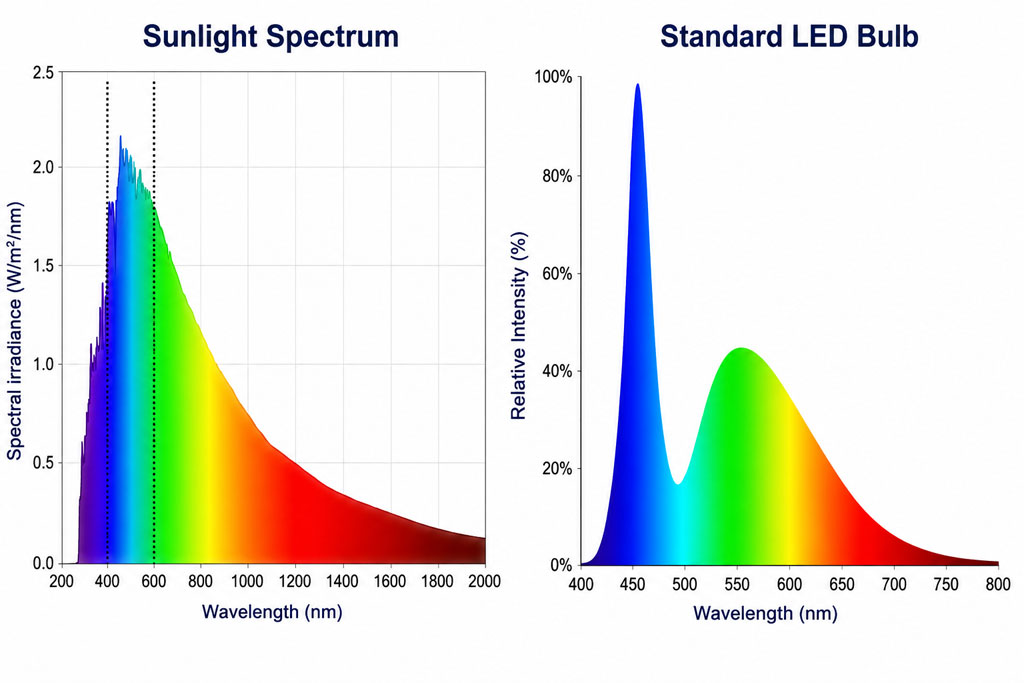
When your child is outdoors, blue light comes packaged with the entire spectrum of sunlight — red, infrared, UV, and thousands of other wavelengths that human biology evolved under. The problem isn't blue light itself; it's receiving isolated blue-rich light indoors without the rest of the spectrum that naturally accompanies it outdoors. This is why spending time outside is so important.
At night — Definitely not
The brain expects darkness
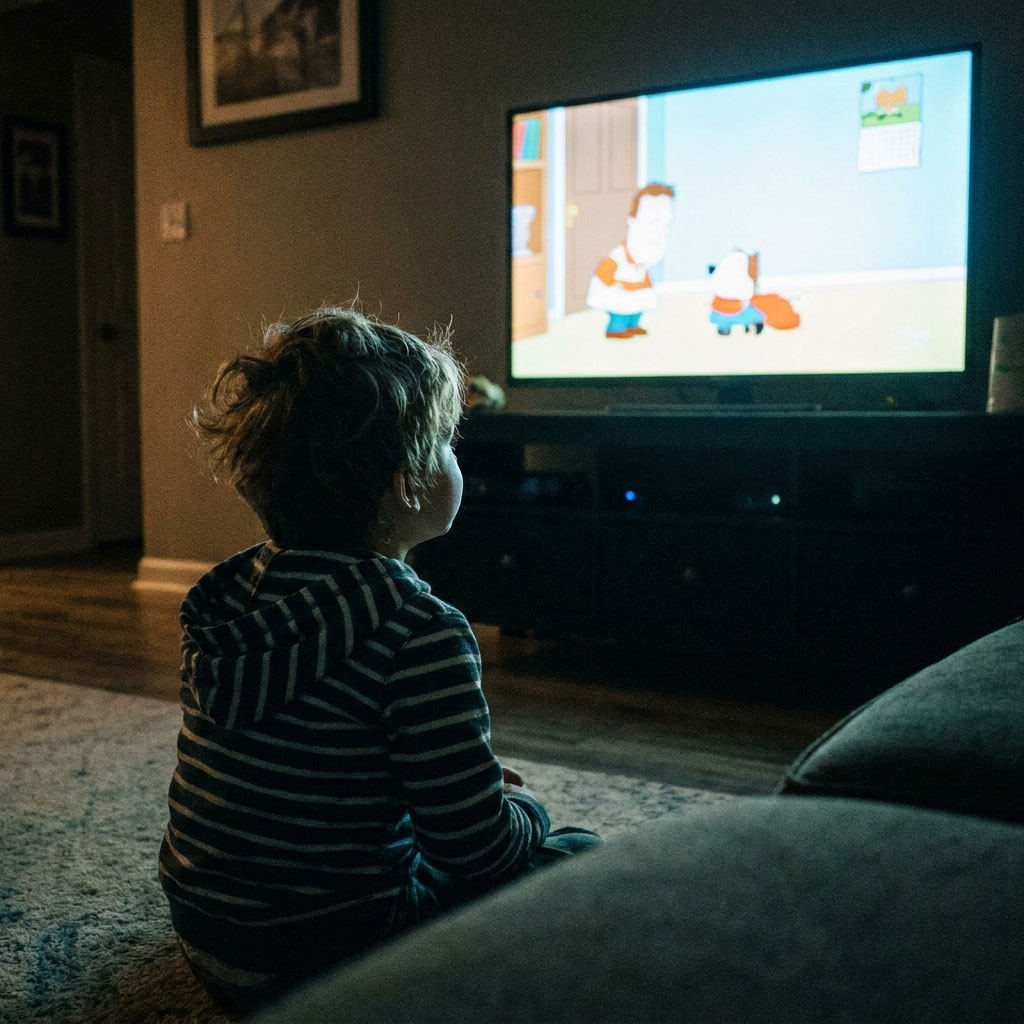
After sunset, your child's brain expects something completely different. It expects darkness — or at the very least, much less blue light. A bedroom should help prepare the body for sleep, not signal that the middle of the day has arrived. Bright cool-white LEDs, tablets, televisions, and blue-rich night lights send the wrong message precisely when melatonin should be rising.
What Parents Can Do
During the day:
- Get children outside as much as possible
- Open curtains and blinds
- Let sunlight enter the home
- Prioritize outdoor play
During the evening:
- Reduce bright overhead lighting
- Avoid cool-white LEDs
- Switch to warm, amber, or red lighting
- Keep bedrooms dim and relaxing
Remember: children don't need less sunlight. They need less artificial daytime after sunset.
10 · Light Colour
What colour light helps kids sleep best?
If sleep is the goal, warmer colors generally work better. Red and amber light contain little or no blue wavelengths and therefore have minimal impact on melatonin production.
Best
Deep red light
Excellent
Amber light
Good
Warm white light below 2700K
Less ideal
Cool-white & daylight LEDs
What Parents Can Do
Use amber or red lighting for:
- Bedtime stories
- Night feeds
- Diaper changes
- Bathroom visits
- Evening winding down
11 · Screens & Sleep
Why shouldn't kids have screen time before bed?
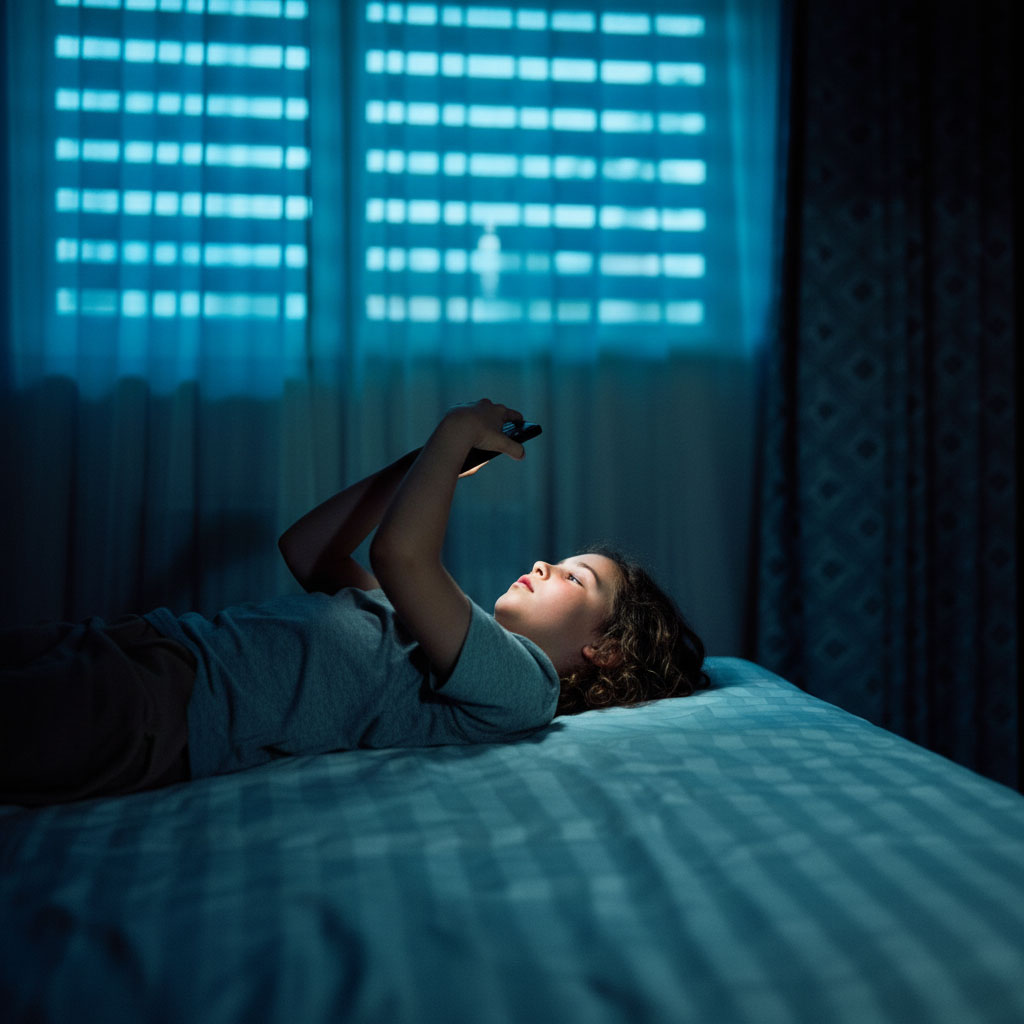
Look at the image above. That single photo explains the issue perfectly. A tired child is lying in bed. A bright screen is inches from their eyes.
The brain doesn't know it's a smartphone. The brain only knows it is receiving a powerful daytime light signal.
Screens create two problems at the same time. First, they deliver blue-rich light. Second, they stimulate the brain mentally and emotionally.
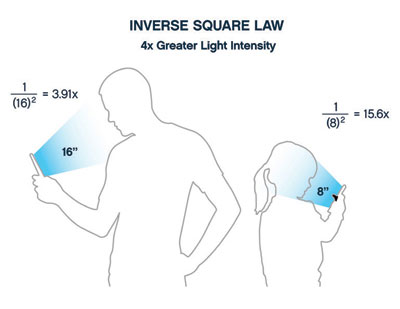
Distance matters.
A phone held 20 cm from a child's eyes delivers a much stronger light signal than a TV across the room. The closer the screen, the more light reaches the retina — and the stronger the message to the brain that it's still daytime.
Research consistently shows screen use before bed is associated with:
- Later bedtimes
- Shorter sleep duration
- Reduced sleep quality
- More sleep problems overall
What Parents Can Do
Create a digital sunset. Try to avoid phones, tablets, and gaming devices during the final 1-2 hours before bed.
Replace them with reading, conversation, drawing, puzzles, or quiet play.
The Practical Guide
A practical guide for parents.
You do not need to create a perfect environment. You simply need to give your child's body the signals it evolved with.
Get outside after sunrise
Morning sunlight is one of the strongest circadian signals available. Try to get outdoors within the first hour after waking. No need to stare at the sun — simply be outside. Walk. Play. Eat breakfast outdoors.
Natural sunlight helps tell the brain: "The day has started." And that helps determine when the body will feel sleepy later that night.
Spend at least 2-3 hours outdoors every day
Children evolved under sunlight, not LEDs. Try to accumulate 2-3 hours outside whenever possible — playgrounds, sports, walking to school, family walks. Time outdoors helps strengthen healthy circadian rhythms.
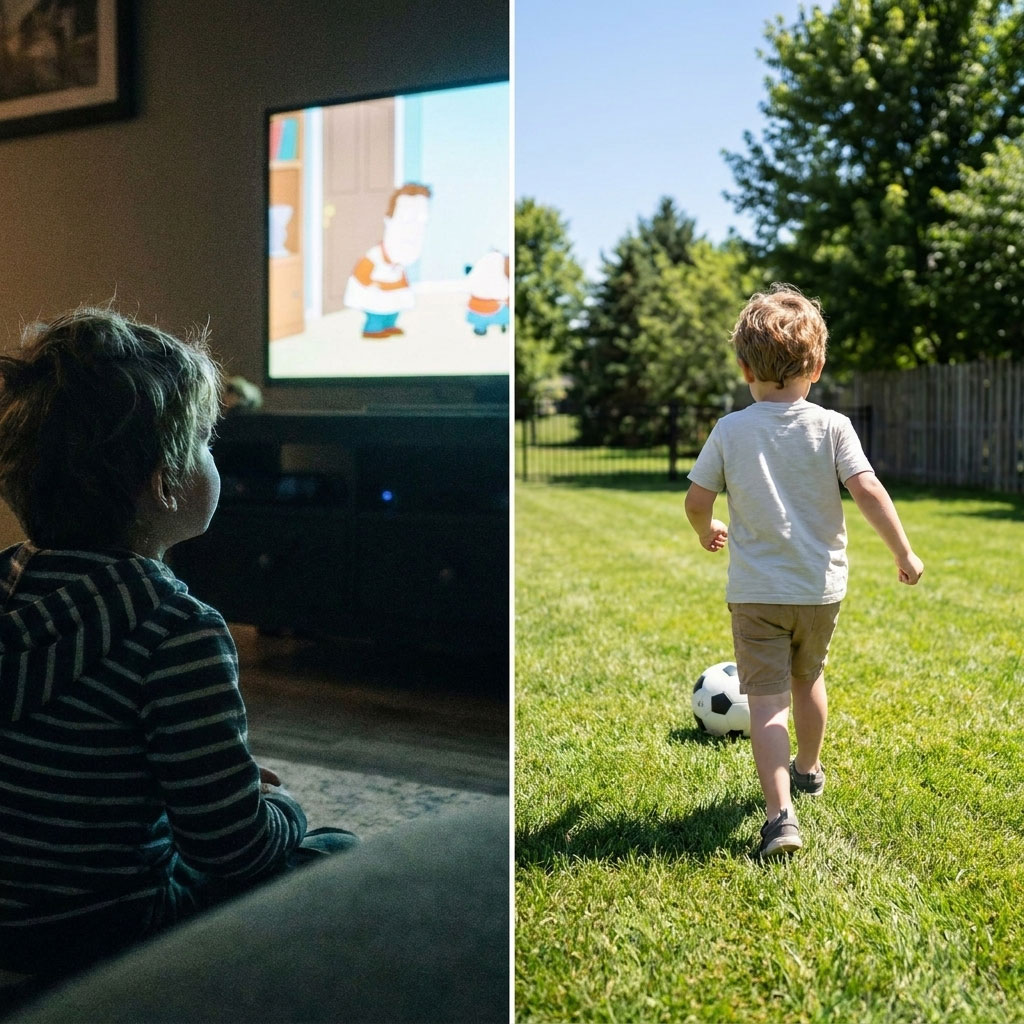
Be careful with phones and tablets
Distance matters. A TV across the room is different from a phone 20 centimeters from the eyes. The closer the light source, the greater the exposure. This is especially important for babies, toddlers, and young children.
Switch to warm lighting before bed
Think of bedtime as a landing process. The brain needs time to slow down. About 2-3 hours before sleep:
- Dim the lights
- Turn off bright overhead LEDs
- Use amber lighting
- Use red lighting
Help your child's body recognize that nighttime has arrived.
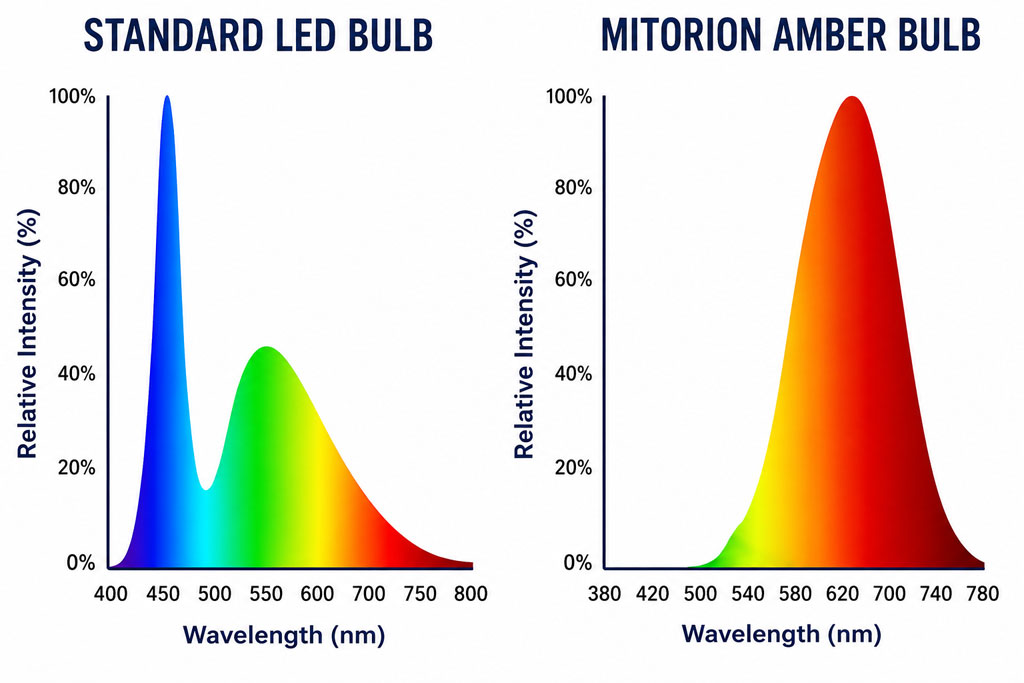
Keep a consistent sleep schedule
The body loves routine. Try to maintain similar wake and sleep times every day. Even on weekends.
Make the bedroom dark
Darkness is not the enemy. Darkness is the signal for sleep. Remove unnecessary light sources:
- Bright night lights
- TVs
- Tablets
- Glowing chargers
If a light is needed, choose a dim amber or red light.
Children don't need less light.
Bright mornings. Outdoor sunlight. Active days. Dim evenings. Dark nights.
That's the environment the human body evolved with. And often, better sleep starts with something as simple as better light.
Build a Home That Helps Your Child Sleep
If there's one thing to take away from this guide, it's this:
Your child doesn't need less light. They need the right light at the right time.
Bright mornings.
Outdoor sunlight.
Active days.
Then, after sunset, a softer home.
Unfortunately, most homes do the exact opposite.
As it gets darker outside, we switch on bright white LEDs that tell the brain it's still daytime.
That's why I created Mitorion.
Not to sell another light bulb.
But to give families an easy way to make their evenings feel more like nature intended.
Every Mitorion light is:
- 100% blue-light free
- Flicker-free
- Designed specifically for evenings and nighttime
Amber Bulb
Simply replace the LED bulbs you already have.
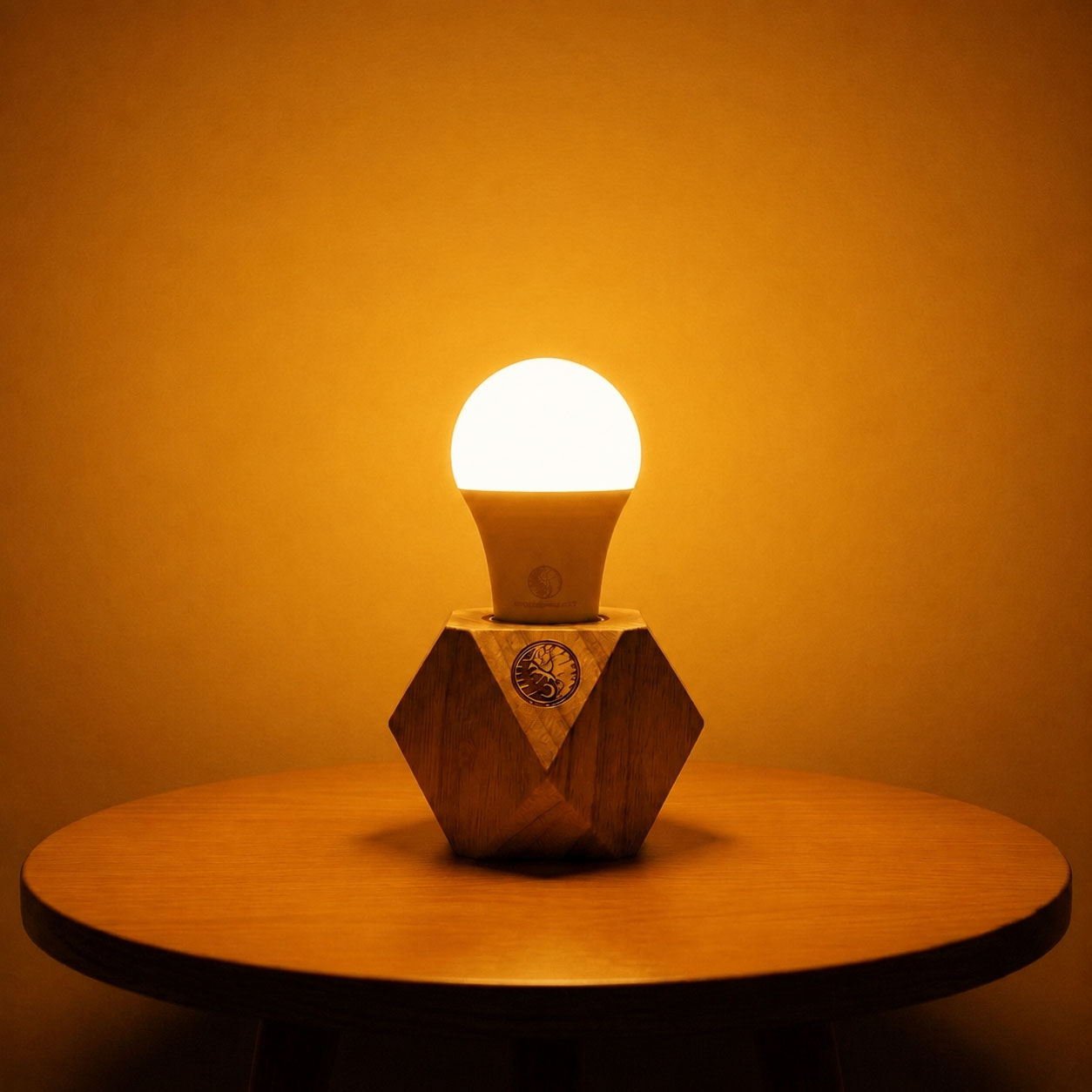
Perfect for living rooms, kids' bedrooms, kitchens, hallways, or anywhere your family spends time after sunset. The easiest way to make your whole home feel calmer.
Ambered Bulb (3-in-1)
One bulb. Three evening modes.
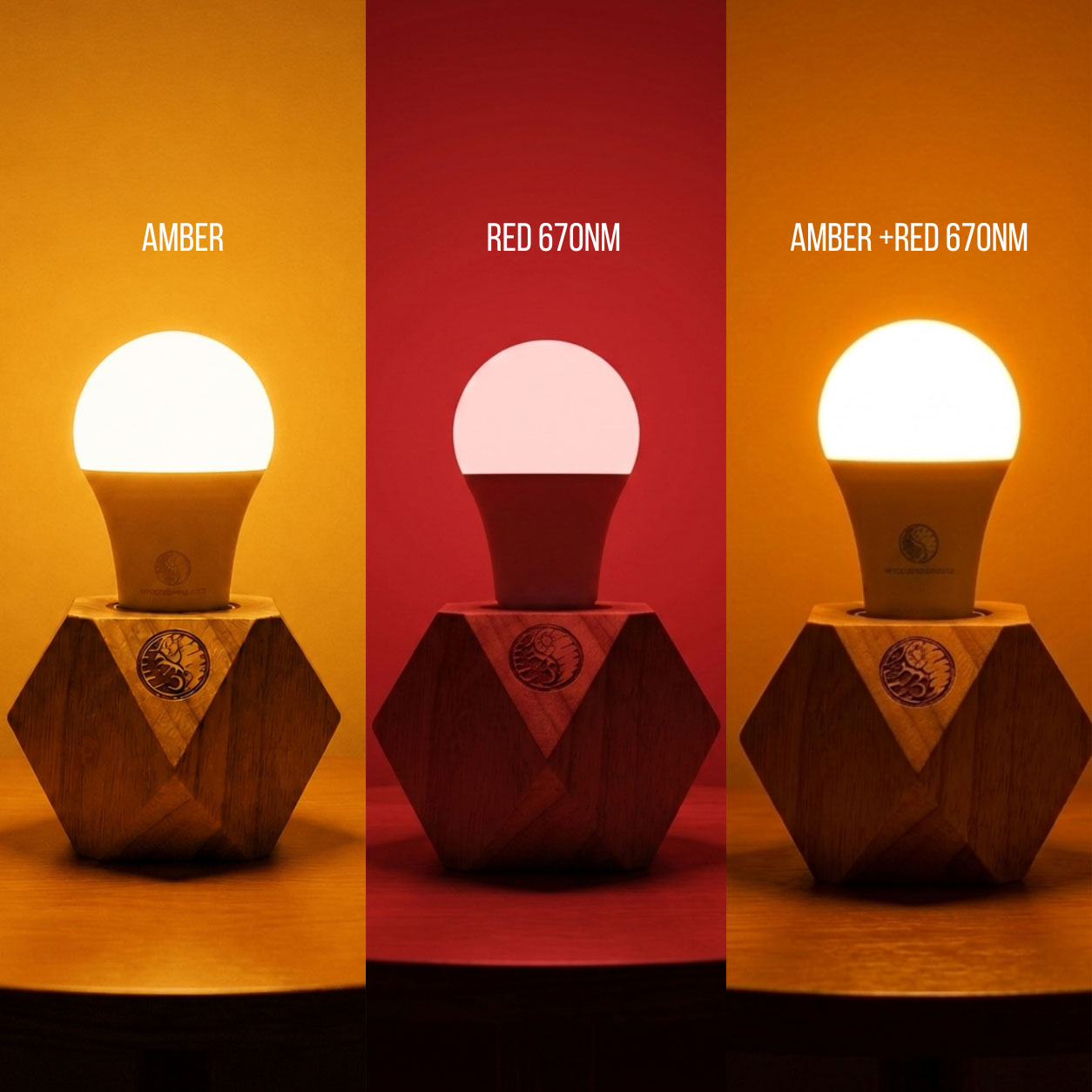
Switch between amber, deep red 670nm, or a combination of both depending on whether you're relaxing, reading with your child, or getting ready for bed.
Red 670nm Bulb
Built for the final hours before sleep.
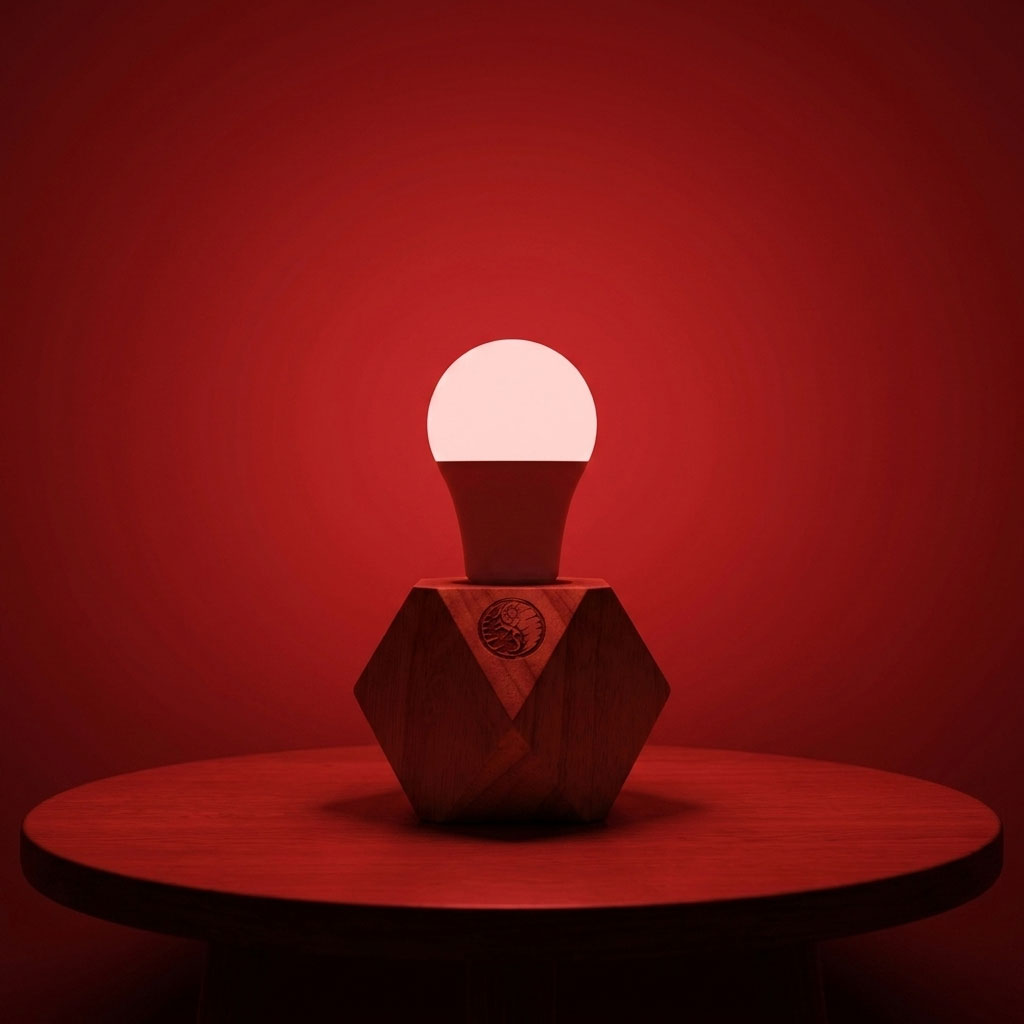
Ideal for bedtime stories, nighttime feeds, diaper changes, or anyone who wants the least disruptive light possible after dark.
Mini Oculus
Our portable clip-on light for all those little nighttime moments.
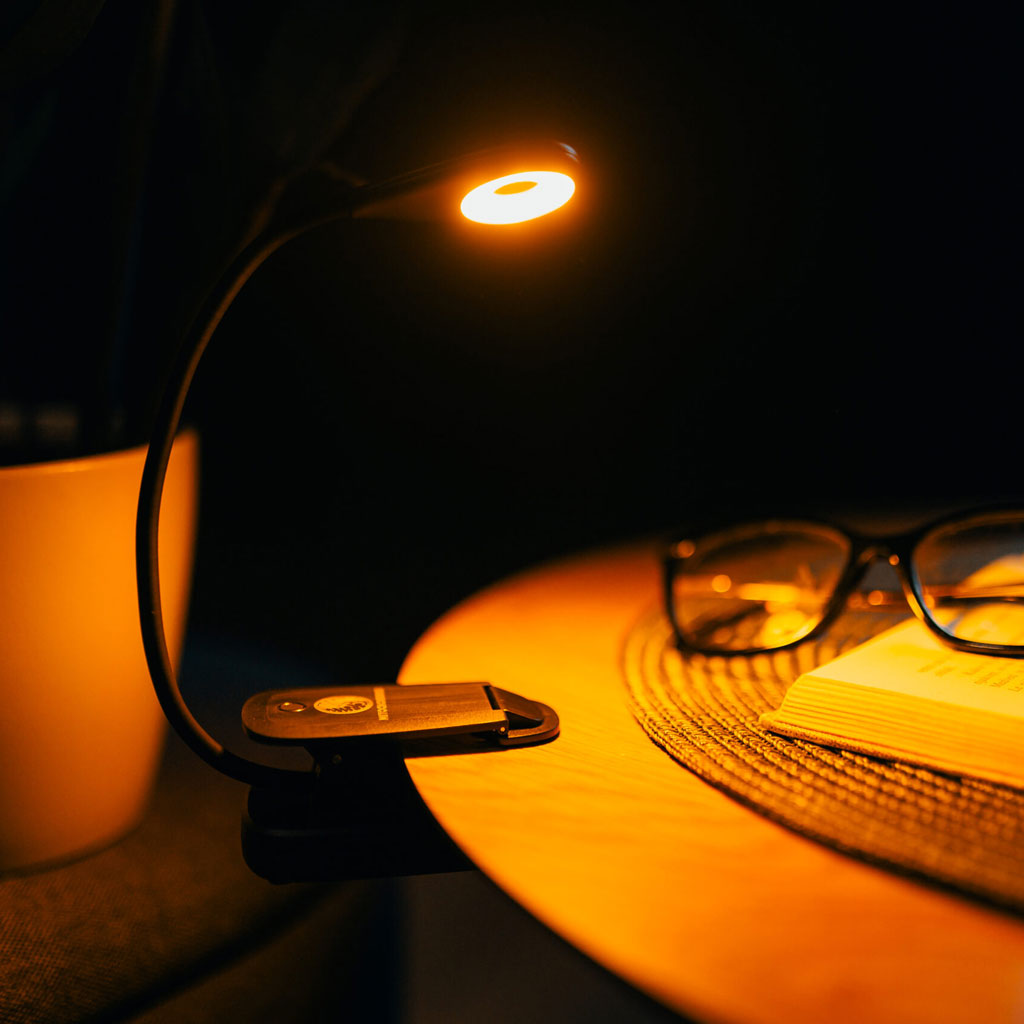
Perfect for breastfeeding, reading, travel, camping, or keeping beside the bed without lighting up the entire room.
Oculus
A bedside lamp designed around your evening routine.
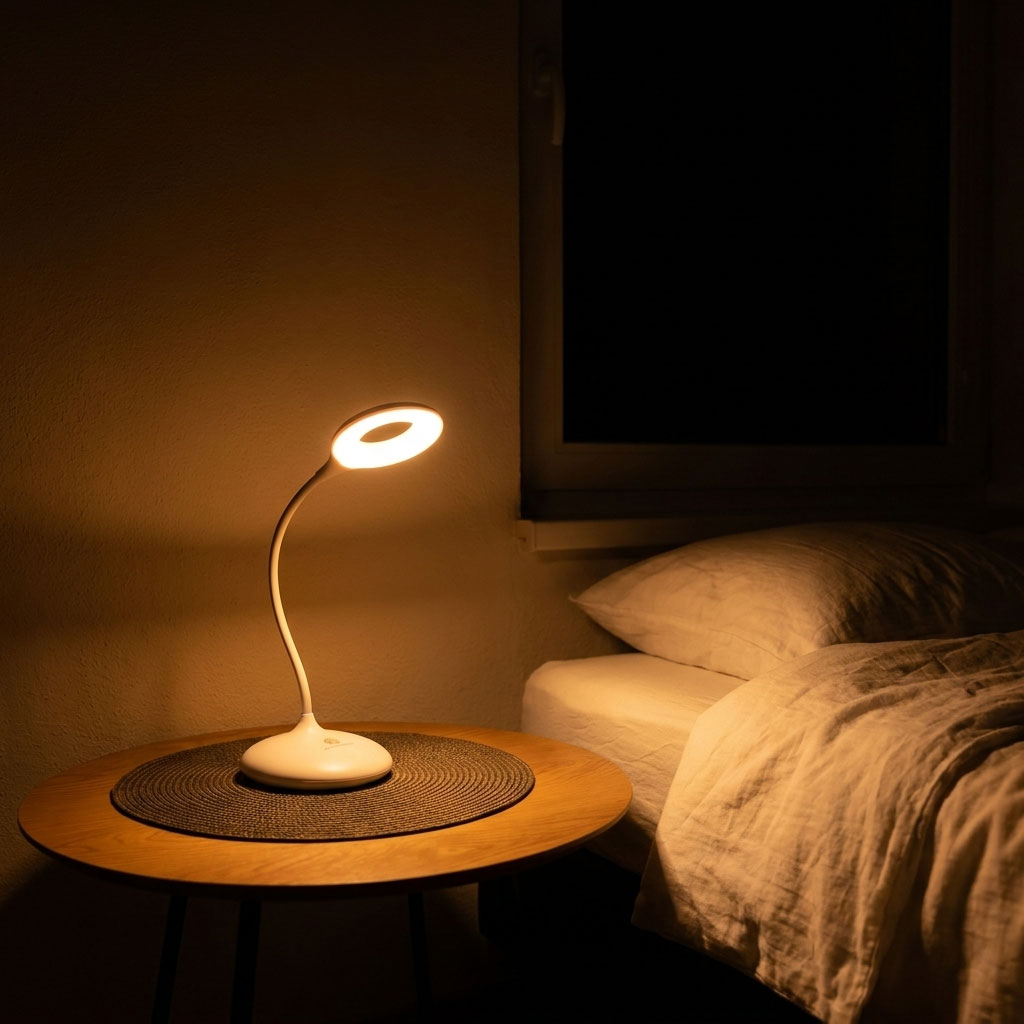
Whether you're reading, nursing your baby, or simply winding down, it gives you comfortable blue-light-free illumination exactly where you need it.
Sensor Magnilight
No need to wake the whole house.
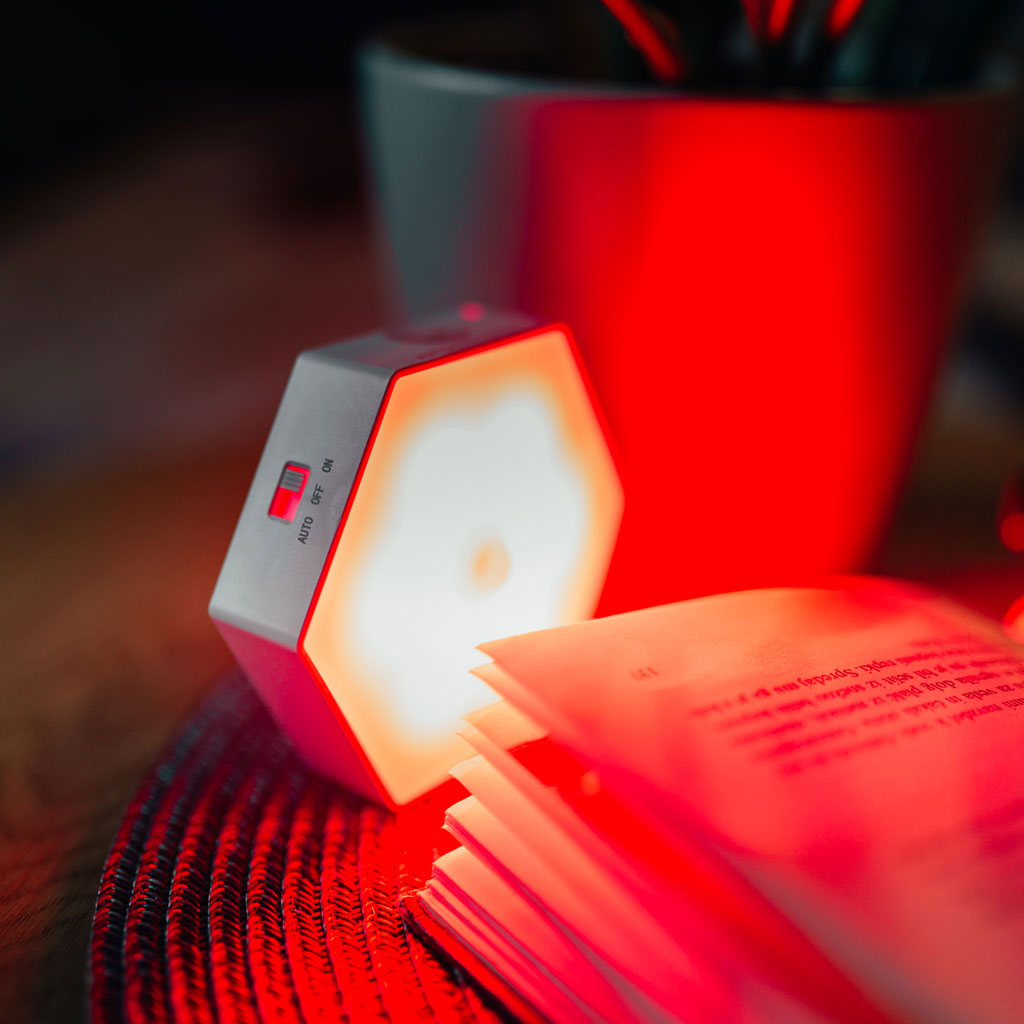
A motion-activated light for hallways, children's rooms, bathrooms, and stairs that turns on only when needed and switches off automatically.
Sensor Plug-In Night Light
Perfect for nurseries, kids' rooms, bathrooms, and hallways.
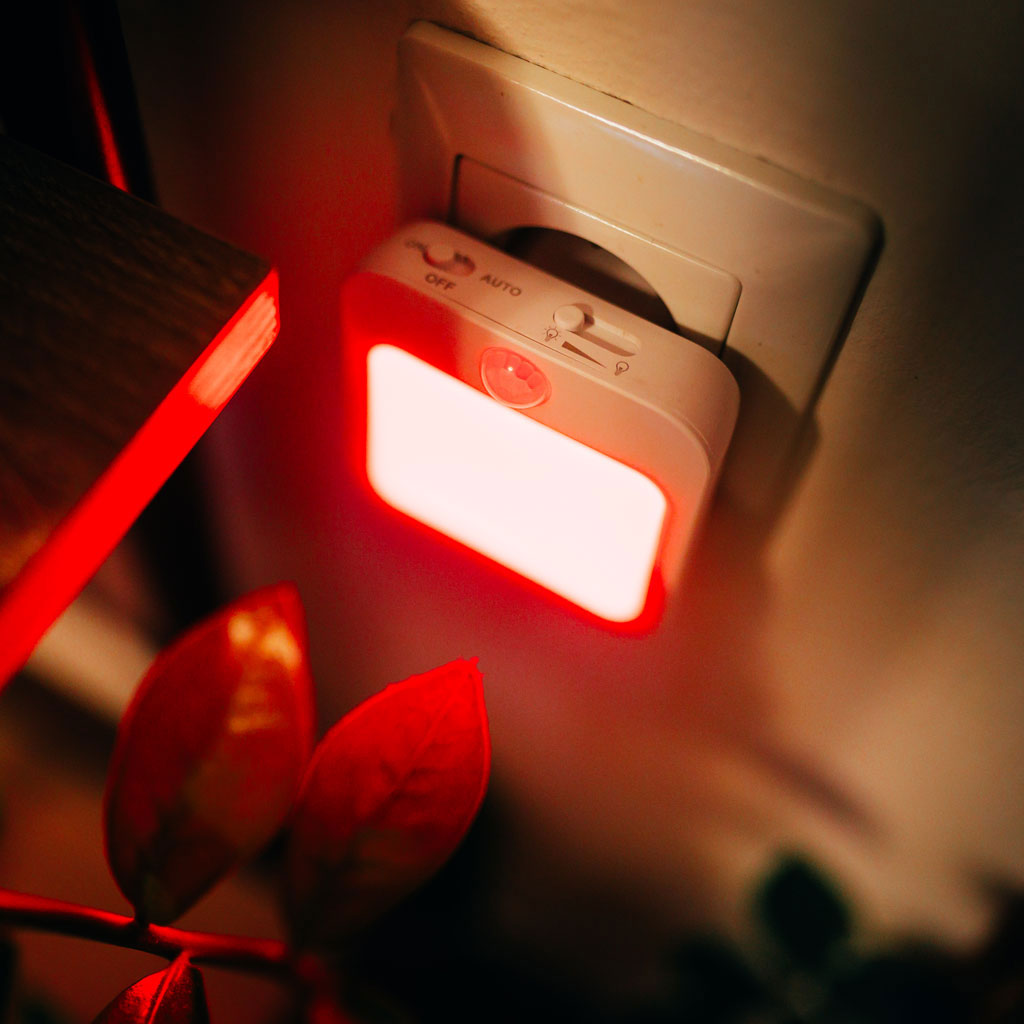
A simple night light that makes nighttime trips safer without flooding the room with bright white light.
Small Change. Big Difference.
You don't need to renovate your home. You don't need to throw away every screen. Sometimes creating a better evening environment starts with something as simple as changing a light bulb. Because better nights often begin with better light.
