
We live in a civilization where our screens follow us from morning to midnight. Phones, laptops, tablets, LED bulbs in every room. With all of that artificial light being constantly shone in our faces we occasionally ask, do blue light glasses actually work? To answer that, you first need to understand what blue light is doing once it’s inside your eyes, and why timing is everything.
What is Light?
Light is electromagnetic energy. It travels in wavelengths, that vary in energy – different wavelengths carry different amounts of energy. Most of the energy in light is beyond what you can see, but even in the light that he can see the difference between red yellow and blue is massive. Red light has long wavelengths, blue light has short wavelengths – shorter wavelengths mean more energy, which means more biological impact from blue light.
The closer a wavelength is to 400 nanometers (nm), the stronger it’s effect on various cells and tissues. This is important when it comes to the path taken by that light to reach your eye.
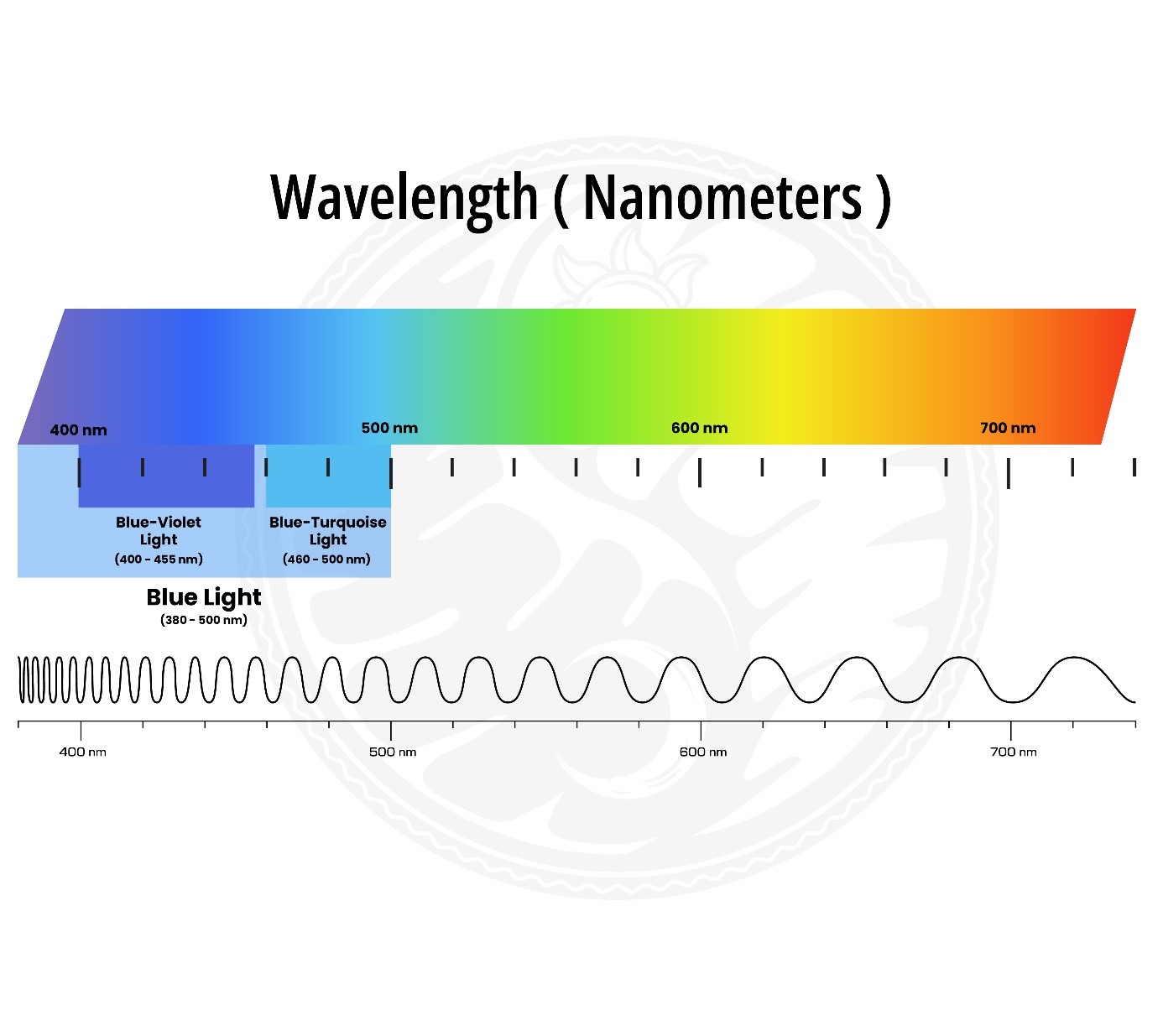
Wavelengths, Penetration & Power
When light strikes your retina it’s wavelength that determines how strongly it’s activating the various cells it impacts. High energy blue light hitting the retina, therefore, will stimulate retinal cell more vigorously when compared to red or amber light. It creates more oxidative stress and strain inside that support layer of the retina, especially the RPE, the tissue responsible for cleaning and maintaining your photoreceptors.
Given the choice between a soft amber bulb and a bright blue-rich LED, the LED will always hit harder. It wakes you up, increases stimulation, sends a signal to your brain that it is daytime.
How Blue Light Affects the Human Retina & Circadian Rhythm Retina
The retina is not merely a camera sensor. It is living, squishy pieces of tissue with sensitive photoreceptive cells inside.
Behind the photoreceptors is the RPE, a thin layer acting as the janitors. Recycling nutrients, getting rid of waste, doing whatever it takes to keep your vision “on” and stable. Over time repeated signals from blue wavelengths increases oxidative stress on that layer. 400 to 460 nm is the most stressful zone; that doesn’t mean blue light is “toxic,” it means that your retina reacts most to that part of the spectrum, especially in front of artificial light sources devoid of red and infrared balancing.

Source: https://gene.vision/retina/
How Blue Light Affects Your Circadian Rhythm
Light signals control your internal clock, especially blue. In your retina there are special cells known as ipRGCs that contain melanopsin. These cells are most sensitive to blue light around 460 to 480 nm. When they see that light they send a message to your brain: “Stay awake, stay alert, daytime is here.”
That works just fine with sunlight. With artificial light at night, it sends the same message at the wrong time. Melatonin drops, you remain alert and your schedule shifts later, over months and years you develop a chronic lopsidedness between your lifestyle and biology.

Why Blue Light After Sunset Is Bad
Imagine your regular evening. After dinner you sit under that bright LED ceiling light and open your phone. That “white” light is heavily blue-weighted, and even “warm white” bulbs are weighted towards blue pretty strongly.
Your brain gets two contradictory messages. Your environment is saying “daylight” while your own biology is telling you “night”. You are weakening your sleep and messing up your rhythms
How Blue Light Glasses Work
They help reduce the stimulating effects of the light if you cannot change your environment. If you have to do work on a screen late at night or you are sitting under a cool white superbright LED they help bring down the impact on your retina and circadian rhythm. They don’t fix the bad lighting, they just decrease the load.
What They Do Well
They will not fix a bright environment even they evening if you are sitting under several bright overhead lights in the environment. If your environment is blasting high energy light at you, glasses are only a partial solution.
What They Cannot Do
They will not fix a bright environment even they evening if you are sitting under several bright overhead lights in the environment. If your environment is blasting high energy light at you, glasses are only a partial solution.
The Best Approach
- Orange or red lenses are much more effective. They cut off blue light earlier and more thoroughly.
- Clear lenses that claim “blue filter” often do very little in that critical 460-480 nm zone. If they don’t block up to 550 nm (or well into the blue-green part), their impact on circadian biology or retinal stress is minimal.
- Glasses do help when you cannot change your lighting environment. They’re a tool — not a magic fix.
When Glasses Are Necessary (But Also Lighting Matters)
Wearing blue-blocking glasses is especially necessary when you can’t control the lighting around you. Suppose you’re in a room lit by cold-white LEDs (5000 K–8000 K) or you’re working late at a screen. Then glasses can take the load off your biology.
But the better move is altering your environment:
- Switch to warm or amber lighting at home after sunset.
- Use bulbs that minimize blue output entirely.
- Dim lights in the evening.
- Restrict screen time or use night-mode filters.
If you rely solely on glasses but keep a flood of blue light in your environment, you’re only half-solving the issue.
Final Thoughts
Use blue light glasses at night if you need screens or bright lighting, but also change your lighting environment:
Use amber bulbs after the sun sets.
Dim lights in the evening.
Avoid cool white LEDs at night.
Use night mode screens.


